Quick overview
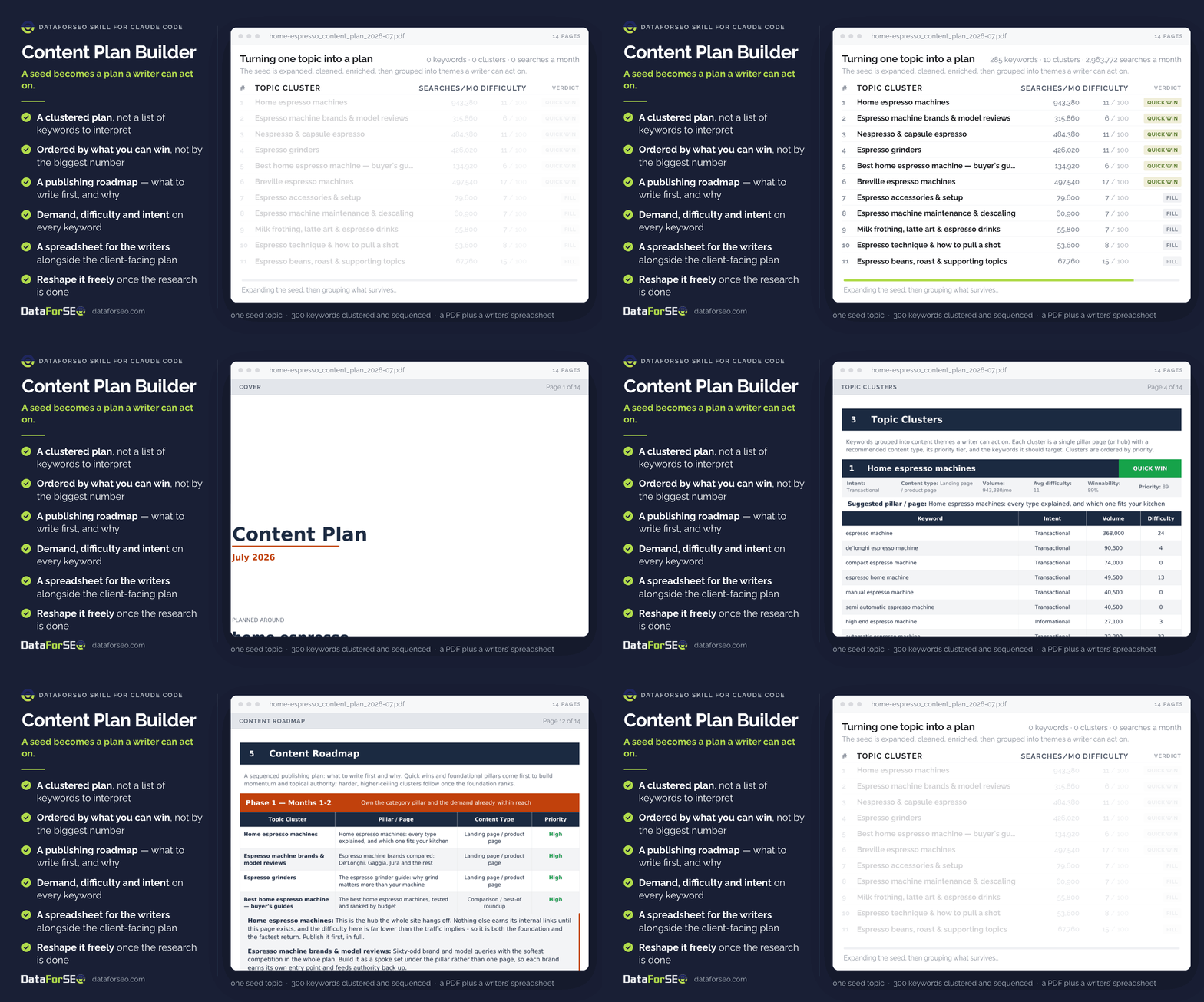
Give this skill a seed — a topic, a keyword list, or a competitor’s domain — and it returns a content plan someone can start writing from today. The seed is expanded into a full keyword universe, cleaned of terms that only look related, grouped into topic clusters, and then put in order. The order is the point: clusters are ranked by how winnable they are rather than how big they look, so the plan tells you what to publish first and why the biggest number isn’t always the answer.
Who it’s built for
For content and SEO teams, agencies pitching a content programme, and solo operators without a research department behind them. It earns its place the moment a client asks “so what should we write?” and the honest answer has to be more than a keyword export.
What you get
- Themes, not a keyword dump. Clusters a writer can act on, each with a suggested content type — landing page, buyer’s guide, how-to.
- A running order you can defend. Clusters ranked by what you can realistically win, with demand weighed against how hard the competition is — which regularly puts a smaller cluster ahead of a bigger one.
- A phased roadmap. What to publish in the first two months, what comes next, and what compounds later.
- Every keyword carrying its context — how much it’s searched, how hard it is, and what the searcher is actually trying to do.
- A spreadsheet for the people writing, alongside the client-facing plan.
- A cleaned universe. Terms that merely look related are removed, so the plan isn’t inflated by demand you could never convert.
- Reshaping without re-buying data. Once the research is done, the plan can be re-cut at no extra cost.
What you need to get started
- A DataForSEO account and your API credentials.
- Claude Code, with the DataForSEO connection added once.
- The Content Plan Builder skill installed.
- A seed — a topic, a list of keywords, or a domain to reverse-engineer — plus the market and language you’re planning for.
Workflow breakdown
- You give the seed and the market you’re planning for.
- The seed is expanded into a full keyword universe, then filtered so terms that only look related don’t inflate the plan.
- Every surviving keyword is enriched with search demand, ranking difficulty and search intent.
- Keywords are grouped into topic clusters, each with the kind of page that should serve it.
- Clusters are scored on winnability and put in priority order — demand weighed against how beatable the competition is.
- The order becomes a phased publishing roadmap, delivered as a client-ready plan plus a spreadsheet with every keyword, cluster and phase for whoever writes it.